Here is some Video about home
Kwakwaka'wakw Nation - 1 - Kwakutil
Kwakwaka'wakw Nation - 2 - Kwakutil
Kwakwaka'wakw Nation - 3 - Kwakiutl
Kwakwaka'wakw Nation - 4 - Kwakiutl
Kwakwaka'wakw Nation - 5 - Kwakiutl
Wednesday, November 25, 2009

Tuesday, November 24, 2009
1 in 4 Native kids growing up in Poverty
"Today for the first time in history, the largest group of Americans living in poverty are children. One in five children live in the most abject, dangerous, hopeless, back-breaking, gut-wrenching poverty any of us could imagine. One in five, and they're children. If fidelity to freedom of democracy is the code of our civic religion, then surely the code of our humanity is faithful service to that unwritten commandment that says we shall give our children better than we ourselves received." - West Wing
I am using this quote as an intro to a story that came out yesterday that says 1 in 10 children in Canada are living in poverty. What is also says that 1 in 4 native children are living in poverty. 1 in 4!
www.cbc.ca/canada/manitoba/story/2009/11/24/child-poverty.html
We need to be crying out against this. Writing our government, our band councils, amnesty international, whomever we can that might help fix this. Most importantly, we have to work to fix it ourselves. Our voices count, our vote counts. We are suppose to give our children more then we have. We need to finish school, we need to get jobs that afford us a standard of living that isn't poverty. We need to help our families. We need to expect more of ourselves, we need to be responsible for ourselves, our choices, our people. It isn't all external forces that cause this statistic. External forces are most assuradly a part of it, but not entirely.
How do we change this statistic? How do we ensure our children have better then we ourselves had???
Monday, November 23, 2009
CBC Radio - Native Kids in care - Broken promises
Child Welfare - Native Kids
Two decades ago, Canada signed on to the United Nations Convention for the Rights of the Child. It acknowledged that all children have the right to be safe and protected from harm, cared for, nurtured, and heard.
It's a commitment to children that critics say Canada has ignored.
Their case in point. One in ten Canadian children live in poverty and a lot of those children live on reserves. And it's being alleged that those kids do not have the same access to health care, education and other services as children living off reserves.
The Assembly of First Nations and the First Nations Child and Family Caring Society have filed a human rights complaint, saying this is blatant discrimination.
A tribunal had been scheduled to begin hearings into the complaint last week. But those hearings have now been postponed until January 18th, a delay that further frustrates those making the complaint.
Cindy Blackstock is one of them. She is the Executive Director of the First Nations Child and Family Caring Society. She is to be awarded the Economic Justice Fellowship today from The Atkinson Charitable Foundation. She was in Montreal. And Carolyn Buffalo is Chief of the Montana Cree Nation in Hobbema, Alberta and mother of Noah.
We invited Chuck Strahl, the Minister of Indian and Northern Affairs Canada and Janis Tarchuk, Alberta's Minister of Children and Youth Services to appear on the program. They both declined our invitation.
We also invited federal Health Minister Leona Aglukkaq but received no response. Ottawa has responded to the Human Rights complaint by arguing the Tribunal does not have jurisdiction to hear the matter because the federal government is the funder of the services and not the provider. The government will be in Federal Court in January to try and stop the Tribunal.
- Taken from CBC radio website - all rights belong to CBC
http://www.cbc.ca/thecurrent/
Friday, August 08, 2008
A prayer
Oh Great Spirit,
Whose voice I hear in the wind,
Whose breath gives life to the world,
Hear me! I come to you as one of your many children.
I am small and weak.
I need your strength and wisdom.
May I walk in beauty.
Make my eyes behold the red and purple sunset.
Make my hands respect the things that you have made,
And my ears sharp to hear your voice.
Make me wise so that I may know the things
That you have taught your children--
The lessons that you have hidden in every leaf and rock.
Make me strong, not to be superior to my brothers,
but to be able to fight my greatest enemy: myself.
Make me ever ready to come to you with straight eyes,
so that When life fades as the faded sunset
My spirit will come to you without shame.
-John Yellow Lark
Thursday, June 12, 2008
Canadian Prime Minister Apologizes to Indians
Prime Minister Harper offers full apology on behalf of Canadians for the Indian Residential Schools system.
11 June 2008
Ottawa, Ontario
The treatment of children in Indian Residential Schools is a sad chapter in our history. For more than a century, Indian Residential Schools separated over 150,000 Aboriginal children from their families and communities.
In the 1870’s, the federal government, partly in order to meet its obligation to educate Aboriginal children, began to play a role in the development and administration of these schools.
Two primary objectives of the Residential Schools system were to remove and isolate children from the influence of their homes, families, traditions and cultures, and to assimilate them into the dominant culture.
These objectives were based on the assumption Aboriginal cultures and spiritual beliefs were inferior and unequal. Indeed, some sought, as it was infamously said, "to kill the Indian in the child". Today, we recognize that this policy of assimilation was wrong, has caused great harm, and has no place in our country.
One hundred and thirty-two federally-supported schools were located in every province and territory, except Newfoundland, New Brunswick and Prince Edward Island. Most schools were operated as "joint ventures" with Anglican, Catholic, Presbyterian or United Churches. The Government of Canada built an educational system in which very young children were often forcibly removed from their homes, often taken far from their communities.
Many were inadequately fed, clothed and housed. All were deprived of the care and nurturing of their parents, grandparents and communities. First Nations, Inuit and Métis languages and cultural practices were prohibited in these schools. Tragically, some of these children died while attending residential schools and others never returned home.
The government now recognizes that the consequences of the Indian Residential Schools policy were profoundly negative and that this policy has had a lasting and damaging impact on Aboriginal culture, heritage and language. While some former students have spoken positively about their experiences at residential schools, these stories are far overshadowed by tragic accounts of the emotional, physical and sexual abuse and neglect of helpless children, and their separation from powerless families and communities.
The legacy of Indian Residential Schools has contributed to social problems that continue to exist in many communities today. It has taken extraordinary courage for the thousands of survivors that have come forward to speak publicly about the abuse they suffered.
It is a testament to their resilience as individuals and to the strength of their cultures. Regrettably, many former students are not with us today and died never having received a full apology from the Government of Canada.
The government recognizes that the absence of an apology has been an impediment to healing and reconciliation. Therefore, on behalf of the Government of Canada and all Canadians, I stand before you, in this Chamber so central to our life as a country, to apologize to Aboriginal peoples for Canada’s role in the Indian Residential Schools system.
To the approximately 80,000 living former students, and all family members and communities, the Government of Canada now recognizes that it was wrong to forcibly remove children from their homes and we apologize for having done this.
We now recognize that it was wrong to separate children from rich and vibrant cultures and traditions that it created a void in many lives and communities, and we apologize for having done this.
We now recognize that, in separating children from their families, we undermined the ability of many to adequately parent their own children and sowed the seeds for generations to follow, and we apologize for having done this.
We now recognize that, far too often, these institutions gave rise to abuse or neglect and were inadequately controlled, and we apologize for failing to protect you. Not only did you suffer these abuses as children, but as you became parents, you were powerless to protect your own children from suffering the same experience, and for this we are sorry.
The burden of this experience has been on your shoulders for far too long. The burden is properly ours as a Government, and as a country. There is no place in Canada for the attitudes that inspired the Indian Residential Schools system to ever prevail again. You have been working on recovering from this experience for a long time and in a very real sense, we are now joining you on this journey.
The Government of Canada sincerely apologizes and asks the forgiveness of the Aboriginal peoples of this country for failing them so profoundly.
We are sorry.
In moving towards healing, reconciliation and resolution of the sad legacy of Indian Residential Schools, implementation of the Indian Residential Schools Settlement Agreement began on September 19, 2007. Years of work by survivors, communities, and Aboriginal organizations culminated in an agreement that gives us a new beginning and an opportunity to move forward together in partnership. A cornerstone of the Settlement Agreement is the Indian Residential Schools Truth and Reconciliation Commission.
This Commission presents a unique opportunity to educate all Canadians on the Indian Residential Schools system. It will be a positive step in forging a new relationship between Aboriginal peoples and other Canadians, a relationship based on the knowledge of our shared history, a respect for each other and a desire to move forward together with a renewed understanding that strong families, strong communities and vibrant cultures and traditions will contribute to a stronger Canada for all of us.
Saturday, January 13, 2007

Sunday, January 07, 2007
300 reasons not to forget lessons of Wounded Knee
By TIM GIAGO (NANWICA KCIJI)
While Americans agonize over the contents of the Iraq Study Group report and weigh the options of extricating U.S. soldiers from the middle of a civil war, the people of the Pine Ridge Reservation in South Dakota will gather on a lonely hill overlooking the demolished village of Wounded Knee -- destroyed during the occupation of the American Indian Movement in 1973 and never rebuilt -- to commemorate and grieve the massacre of their ancestors.
It was after a night so cold that the Lakota called it "The Moon of the Popping Trees," because as the winter winds whistled through the hills and gullies at Wounded Knee Creek on the morning of Dec. 29, 1890, one could hear the twigs snapping in the frigid air.
When a soldier of George Armstrong Custer's former troop, the 7th Cavalry, tried to wrest a hidden rifle from a deaf Lakota warrior after all of the other weapons had already been confiscated from Sitanka's (Big Foot) band of Lakota people, the deafening report of that single shot caused pandemonium among the soldiers and they opened up with their Hotchkiss machine guns upon the unarmed men, women and children.
Thus began an action the government called a "battle" and the Lakota people called a "massacre." The Lakota people say that only 50 people of the original 350 followers of Sitanka survived that morning of slaughter.
One of the survivors, a Lakota woman, was treated by the Indian physician Dr. Charles Eastman at a makeshift hospital in a church in the village of Pine Ridge. Before she died of her wounds, she told about how she had concealed herself in a clump of bushes. As she hid there she saw two terrified little girls running past. She grabbed them and pulled them into the bushes.
She put her hands over their mouths to keep them quiet, but a mounted soldier spotted them. He fired a bullet into the head of one girl, then calmly reloaded his rifle and fired into the head of the other girl. He then fired into the body of the Lakota woman. She feigned death and, although badly wounded, lived long enough to relate her terrible ordeal to Dr. Eastman. She said that as she lay there pretending to be dead, the soldier leaned down from his horse, used his rifle to lift up her dress in order to see her private parts, then snickered and rode off.
As the shooting subsided, units of the 7th Cavalry rode off toward White Clay Creek near Pine Ridge Village on a search-and-destroy mission. When they rode onto the grounds of Holy Rosary Indian Mission, my grandmother Sophie, a student at the mission school, and the other Lakota children, were forced by the Jesuit priests to feed and water their horses.
My grandmother never forgot that terrible day, and she often talked about how the soldiers were laughing and bragging about their great victory. She recalled one soldier saying, "Remember the Little Big Horn."
The Massacre at Wounded Knee was called the last great battle between the United States and the Indians. The true version of the events of that day were polished and sanitized for the consumption of most Americans. Twenty-three soldiers of the 7th Cavalry were awarded this nation's highest honor, the Medal of Honor, for the murder of nearly 300 innocent and unarmed men, women and children.
Although 25 soldiers died that day, historians believe that most of them died of friendly fire when they were caught in the crossfire of the machine guns. Many Lakota have tried in vain to have those medals revoked.
Before they died, the Lakota warriors fought the soldiers with their bare hands as they shouted to the women and children, "Inyanka po, inyanka po! (Run, run)." The elderly men, unable to fight back, fell on their knees and sang their death songs. The screams and the cries of the women and children hung in the air like a heavy fog.
When I was a young boy I lived at Wounded Knee. By then the name of the village had been changed to Brennan to honor a Bureau of Indian Affairs superintendent, but all of the Lakota knew why the name was changed. Because although the government tried various ways to conceal the truth, the Lakota people never forgot; they always referred to the hallowed grounds as Wounded Knee, and they continued to come to the mass grave to pray, even though it was roundly discouraged by the government.
As a child I walked along the banks of Wounded Knee Creek and I often had an uneasy feeling, it was as if I could hear the cries of little children. Whenever I visited the trading post where my father worked I would listen to the elders as they sat on the benches in front of the store and spoke in whispered voices as they pointed at the hills and gullies. Never did I read about that horrible day in the history books used at the mission school I attended.
Two ironies still haunt me. Six days after the bloody massacre the editor of the Aberdeen (S.D.) Saturday Pioneer wrote in his editorial, "The Pioneer has before declared that our only safety depends upon the total extermination of the Indians. Having wronged them for centuries, we had better, in order to protect our civilizations, follow it up by one more wrong and wipe these untamed and untamable creatures from the face of the earth."
The author of that editorial was L. Frank Baum, who later went on to write that famous children's book, The Wonderful Wizard of Oz. In calling for genocide against my grandmother and the rest of the Lakota people, he placed the final punctuation upon a day that will forever live in infamy amongst the Lakota.
And finally, as the dead and dying lay in the makeshift hospital in the Episcopal Church in Pine Ridge Village, Dr. Eastman paused to read the sign above the entrance that read, "Peace on Earth, Goodwill to Men."
----------------------------------------------------------
Tim Giago, an Oglala Lakota, is the founder and first president of the Native American Journalists Association
Monday, November 27, 2006
Human Rights...... are they actually a privilage?
I have just returned from a four day National Human Rights Convention. It was good, I learned a lot. One of the things I think I learned, is that in truth, Human Rights, aren't Rights, at least not how I understood them. Human Rights, are Rights reserved for a privileged people that believe they own this world. For the rest of us, Human Rights are something we have to fight for, which, then makes it not a Right. Isn't a Right something that just is, something we don't have to fight for and defend with our blood, with our generations?
Is Gitmo, the US's definition of Human Rights in Action? Are fights, and bloodshed on unceded lands of the Six Nations, Oka, Bear Mountain, Pine Ridge, a fight to defend family and land, that doesn't sound like a Right.
The fact that Canada voted AGAINST the UN Declaration of Indigenous Peoples' Rights, I think it says a lot about who Harper believes deserves this "Human Rights"
Tuesday, November 21, 2006
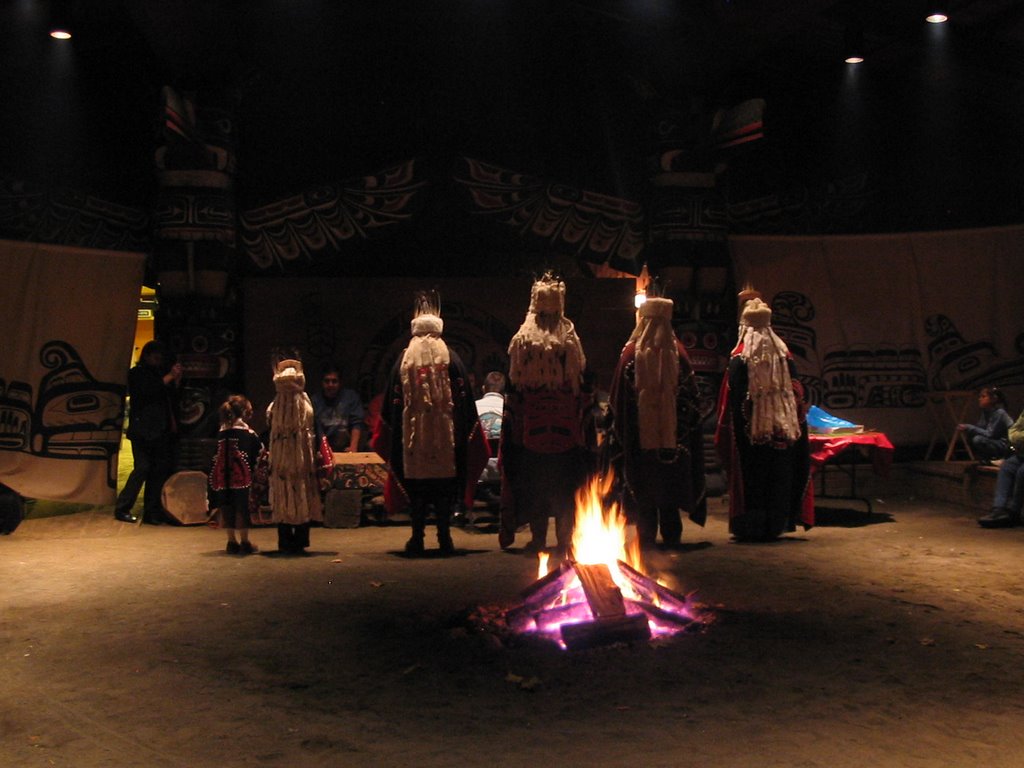
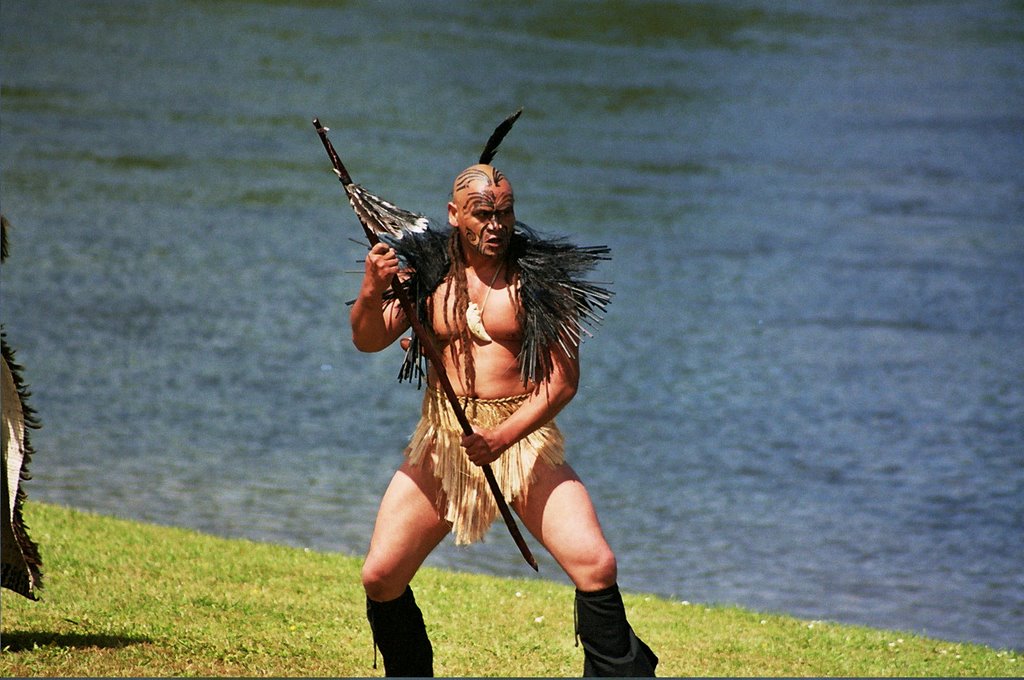
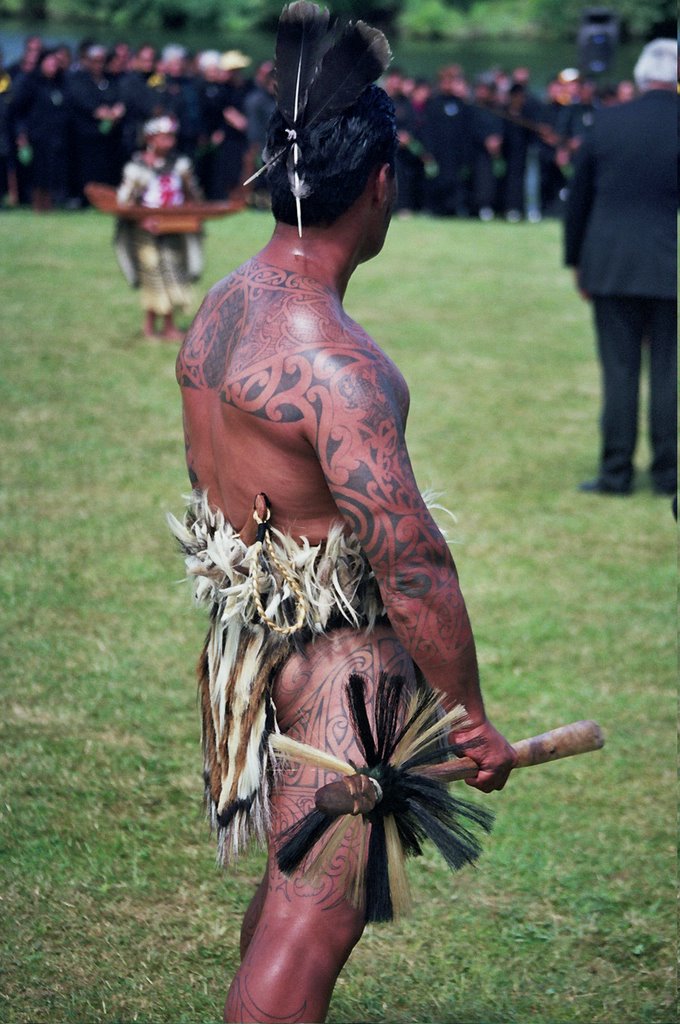
A picture is worth a thousand words
I know I haven't been much with the posts of late. I have put of photo's instead, and I find they still reflect what I am up to, what I'm thinking of lately. I will write more, once I return from the Human Rights Convention.
Monday, November 20, 2006
Friday, November 17, 2006
Thursday, October 26, 2006
Grey's Anatomy - every colour but red
So Grey's Anatomy, one of my favorite shows on TV.
What bothers me with this show, is all the native artwork on the walls of the rooms. Actually that isn't what bothers me, what bothers me is the nice white, black, and asian doctors, the nice variety of colours/ethnicity. How every colour, culture is represented by people, except for First Nations. We get regulated to being the wall art.
What is with that? Why aren't we worth equal?
Tuesday, October 24, 2006
Ward Churchill speaking at UVic
More information to come, but it looks like Ward Churchill may be speaking at an event at the University of Victoria aimed at honouring Vine Deloria.
Friday, October 06, 2006
2 children die in Cowichan Reserve house fire
A nine-year-old girl and a four-year-old boy have died and seven other people are in hospital after fire ripped through a two-storey home just south of Duncan, B.C.
The blaze broke out in the house just after 11 p.m. Wednesday on the Cowichan reserve.
Neighbours said that it took fire crews from Duncan and North Cowichan more than 20 minutes to arrive after 911 was called.
When firefighters arrived, flames at the front door prevented crews from getting inside, neighbours said.
North Cowichan-Duncan RCMP Const. Susan Boyes told CBC News that the inside of the home was completely engulfed in flames.
"Four children and three adults have escaped and are being treated for injuries. Two other children unfortunately did not escape and perished in the fire," Boyes said.
Neighbours said there were nine people living in the house, three adults and six children, and all were related.
The two children who died were cousins.
The other people in the home were taken to hospitals in Duncan, Victoria and Vancouver, depending on the severity of their injuries. The extent of their injuries isn't known.
The cause of the fire has not been determined, but police said early indications are that the fire was not started deliberately.

Top article from CBC, photo and bottom article from Timess Colonist
Two young cousins are dead and their community is in shock after a fire engulfed a house on the Cowichan Reserve near Duncan.
Dead are four-year-old Troy Joe and nine-year-old Marissa Thomas, two of six children in the home when fire broke out at 11:30 p.m. Wednesday.
There were also three adults in the house at the time, including the mother of one of the dead children. They were taken to hospitals in Duncan and Victoria.
Theresa Bartleman, the victims’ aunt, drove to Duncan from Sidney, after receiving a phone call about the fire.She was at the charred house Thursday morning waiting for the bodies to be removed.“Nobody is here for them, everyone is in the hospital,” she said.
-------------
Please everyone check your smoke alarms, make sure you have fire extinguishes and know how to use them, make sure you have insurance. I don't know if it would have helped in this instance, but please always try and keep each other safe.
My heart goes out to the family and the Cowichan community. My prayer is that the two children are at peace now, and that the family heals quickly so they can be together and start the spiritual healing.
Friday, September 29, 2006
MPs scrap as feds snuff aboriginal smoking program
Politicians sparred in the House of Commons on Tuesday over the government's decision to cut off funding for an anti-smoking campaign aimed at First Nations and Inuit people, an effort that Conservative ministers suggested was wasteful and ineffective.
"They can't, certainly, believe that refusing to help aboriginal people stop smoking is in the interest of Conservative voters, " said Tina Keeper, Liberal MP for Churchill, arguing in question period that prevention of cancer and other ailments is cheaper than treatment.
"My question, again, is: Why is this government condemning First Nations and Inuit people in Canada to Third World health conditions?"
Dennis Bevington, the NDP member for Western Arctic, said the $10.8-million cut means "more aboriginal Canadians will get sick and die due to smoking." The were "no consultations, no debate," he said, calling the decision "another sign of just how arrogant and controlling this prime minister is at a time when this country has record surpluses."
from CBC News
------------------------
I know by this time, I shouldn't be surprised with the treatment of the Indigenous people, but COME ON!!!!!!!!!!!!!
Tuesday, September 19, 2006
New northern mine worries natives - Great-grandmother arrested for joining blockade to stop 'threat'
Ethan Baron, The Province Published: Monday, September 11, 2006
A native great-grandmother has been arrested in a bid to stop B.C.'s first new metal mine in 10 years.
BCMetals Corp. believes the Red Chris mine in northern B.C. contains almost a million tonnes of copper and 1.2 million ounces of gold.
But Tahltan elder Lillian Moyer, 67, who was arrested Saturday, says the proposed open-pit operation south of Dease Lake would violate sacred ground, threaten traditional hunting land and ruin fisheries.
"The land means so much to our people," Moyer said yesterday. "We don't want to see any development up there because it is sacred land. I am doing what I can, with great feelings in my heart, to stick up for our rights and for the land, for the future generations of young children."
Members of the Tahltan set up a road blockade June 16 to keep BCMetals from driving heavy equipment through a fish-spawning creek. On Sept. 1, the company's application in B.C. Supreme Court for an injunction to remove the protesters was granted.
Moyer said she visited the blockade Friday night and learned that anyone arrested for violating the injunction would be prohibited from entering traditional hunting grounds on the Todagin Plateau, the site of the planned mine.
"I was listening to all this and I said, 'This doesn't sound right. Why are we being threatened about our own traditional land that we want to protect?'"
Natives spend a month a year camped on the plateau, hunting, Moyer said.
BCMetals president and CEO Ian Smith has said that "the Red Chris mine has received all necessary environmental approvals from federal and provincial authorities."
On July 4, the company said it had temporarily suspended movement of equipment to explore the Red Chris site because trout were spawning at a creek crossing on the access road.
On Saturday, when equipment crossed the creek after RCMP arrested Moyer, oil spilled into the creek.
"[This] oil spill is our worst nightmare coming true," said Rhoda Quock, chief of the Iskut band, part of the Tahltan Nation. "It shows what happens to our lands when development is rammed through."
BCMetals said the spill amounted to less than a half-litre of grease and other hydrocarbons, which washed off the drilling rig and escaped catchment booms.
The Iskut also worry that toxic copper dust will blow from the mine to their community 18 kilometres away, and that leachate from waste ore will contaminate drinking water and fish-bearing streams.
BCMetals expects the mine will produce 50,000 tonnes of copper and 75,000 ounces of gold annually for the first five years. At current prices, that's $440 million in copper and $51 million in gold.
Tuesday, September 12, 2006
Today is September 11, 100 years since Gandhi officially started the non-violent peace movement, 80 years since the British empire set the boundaries between Israel and Palestine to bring about the current conditions today, 35 years since a CIA backed coup put Pinochet in power in Chile starting the slaugter of some 50,000 people, and a mere 5 years since the only known terror attack in the United States, the downing of the WTC's.
I only want to comment on the blinders, because here in the United States, the only act of terror known is what happened in New York on September 11, 2001.
How about February 26, 1856, the Wiyot Massacre in Humboldt Bay?
How about December 29, 1890, Wounded Knee?
How about the dates I can't remember like the slaughter of the Moro's by the U.S. in the Phillipines during the Spanish American War?
How about the bombing of the bomb shelter in the city whose name I forgot during the '91 Gulf War?
But no! These and SO many other dates are ignored or completely forgotten because in the eyes of America, nothing was an act of terror until the WTC came down. Not even what the World Trade Organization does to societies around the world compares in American eyes to the acts of planes being flown into American buildings on American soil. Now...in American eyes...it is terror.
Ward Churchill stated in his lectures about how the Dutch colonized Manhattan Island, allegedly buying it from the Indians there with some trinkets, although the Indians just considered it rent and figured them to be OK. The Dutch decided to put an end to their "Persistent Indian Problem," and slaughtered the Indians on the other side of the island. The Indians weren't exactly sure what was happening and thus didn't put up much of a fight, not being used to warfare where MASS SLAUGHTER is the norm. The Dutch, being so surprised by their victory, cut the heads off of all of their victims to take them back to their leaders as proof of their victory and loyalty. To celebrate, they played soccer with the heads of their victims...all in great fun, of course. Not like the Indians were really human beings. Anyway, Ward says that that little soccer game happened right where the WTC buildings once stood.
Interesting, huh? I don't know the date of that slaughter, either.
------------
Posted from Pudgy Indian
http://www.pudgyindian.blogspot.com/

Monday, September 11, 2006
Need Métis Veterans Memorial Pictures please
"I have been working with Dale Haggerty with the Michif Metis Museum for quite a few years and the museum is working on improving the website and what I have installed is a Métis memorial veterans page...I need pictures of the veterans that have passed, their names date of birth and passing, so we can honor are veterans so they won't be forgotten in memorial....if you can email them and I also have a Métis memorial page for those Métis people who have also passed that has done a lot for our community. We are just installing this page as a temporary site until it gets transferred to its own permanent page. I'll send you the page so far...let me know what you think...still under construction.
I also need veterans that have been doing events also that are still alive...it’s not all about memorials...and events...update too. Or if you know someone who can send to me...I really appreciate it.
http://www.whiteskycloud.com/michifmetismuseum.html soon the Michif Metis Museum will have its own .org
Thanks from Derrick Whiteskycloud"
-------------------------
If anyone can help Derrick with this....
Subscribe to:
Posts (Atom)
